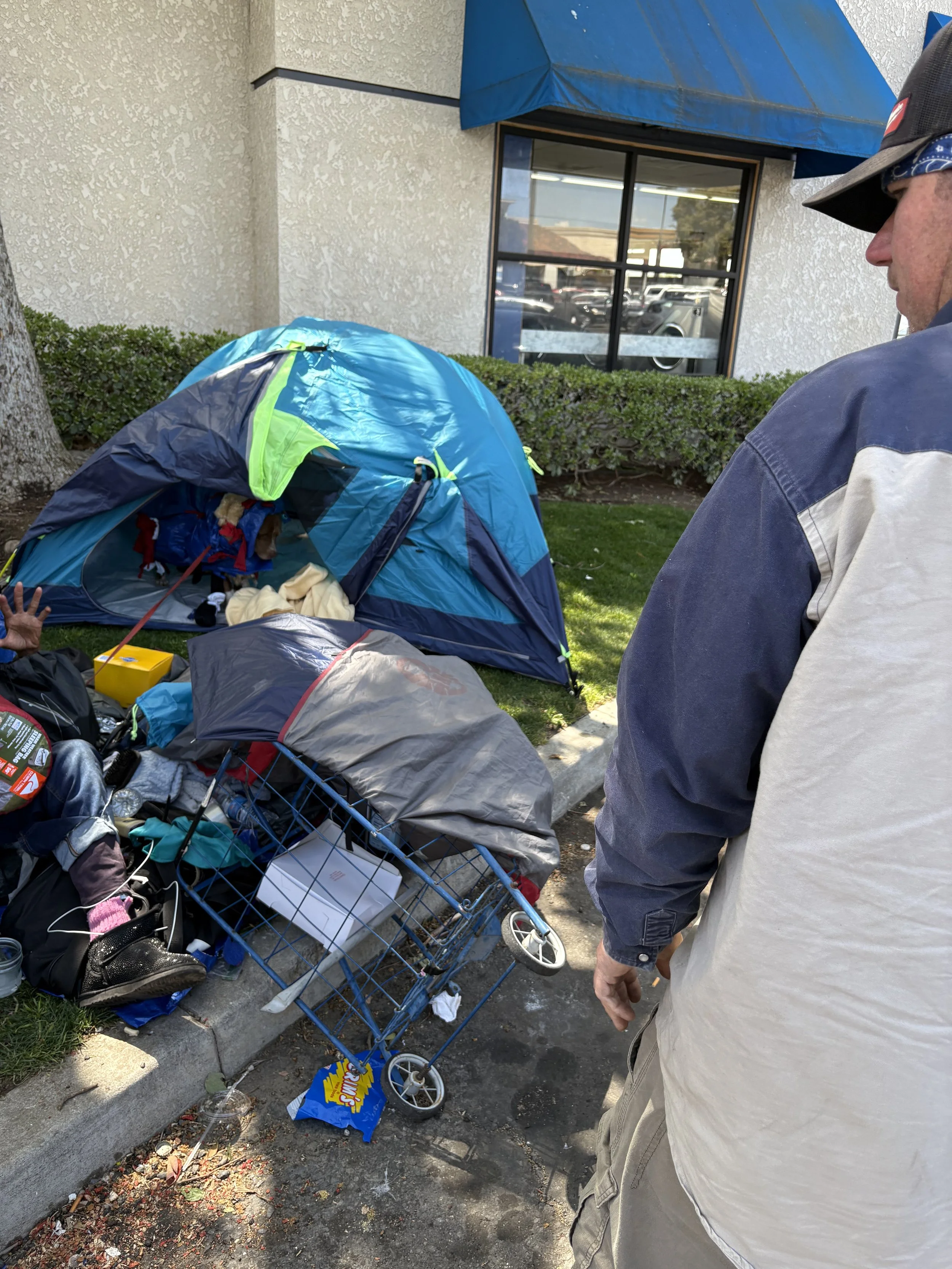

A structured toolkit, training program, and implementation framework designed to help outreach teams build trust, increase engagement, and improve service linkage.
Evidence-Based Outreach Strategies for Engaging Unsheltered Individuals
How the SOTSET Engagement Framework Works
SOTSET provides a structured outreach process designed to help teams build trust, track engagement, strengthen follow-up, and improve connections to services. This section gives visitors a visual snapshot of how the framework works.

Trust Building
Outreach starts with relationship-building. SOTSET emphasizes practical engagement strategies that help outreach workers approach individuals with consistency, empathy, and professionalism.

Engagement Measurement
The framework includes simple tools to help teams monitor engagement patterns, document interactions, and better understand whether outreach efforts are leading to stronger connection over time.

Service Linkage
Once trust is established, outreach can more effectively support referrals, warm handoffs, and connection to housing, behavioral health, benefits, medical care, and other essential services.

Follow-Up Tracking
SOTSET supports a structured follow-up process so outreach teams can maintain continuity, identify missed opportunities, and create a more intentional pathway from engagement to ongoing support.
Early Implementation Insights
Initial SOTSET pilot data demonstrates strong engagement potential during first contact.
- High trust scores recorded during initial outreach encounters
- Participants expressed immediate interest in housing, employment, and case management
- Consistent willingness to engage with follow-up services
SOTSET is designed to track engagement over time, not just contacts, allowing organizations to measure trust, service acceptance, and continuity of care.
Start Your SOTSET Implementation
SOTSET is not just a toolkit; it is a structured, evidence-based implementation system designed to help your team increase service acceptance, strengthen follow-up, and improve continuity of care among unsheltered individuals.
Every organization begins with a guided onboarding process that includes a readiness assessment, workflow mapping, and a customized implementation plan tailored to your community, staffing model, and outreach goals.
Designed for cities, nonprofits, universities, and outreach teams seeking measurable engagement outcomes.
The problem is not only homelessness. It is low trust, low service acceptance, and fragile follow through.
Many communities already offer housing referrals, healthcare access, behavioral health services, and case management. Yet outreach still struggles because many unsheltered individuals have experienced repeated system failures, many outreach workers receive limited structured engagement training, and trust often must be built before services are accepted. Research also shows that initial service engagement is often much lower than stakeholders expect, averaging about 36% across multiple outreach related studies (Kryda & Compton, 2009; Padgett et al., 2008; Tsai et al., 2014; Chen et al., 2007; Rosenheck & Gallup, 1991; Carter et al., 2019).
Unsheltered in California
In California, 66.3% of people experiencing homelessness were unsheltered in the 2024 PIT count, showing how much of the crisis exists outside traditional shelter settings (HUD, 2024).
Average Initial Service Engagement
Studies show that average initial engagement is about 36%, meaning many first contacts do not become actual service acceptance or sustained connection (Kryda & Compton, 2009; Padgett et al., 2008; Tsai et al., 2014; Chen et al., 2007; Rosenheck & Gallup, 1991; Carter et al., 2019).
Housing Enrollment After 12 Months
In one Los Angeles outreach dataset, only 17% of clients were enrolled in interim housing, rapid rehousing, or permanent supportive housing after 12 months, highlighting a major drop-off after initial outreach contact (Hess et al., 2021).
Unsheltered homelessness is also a public health and continuity of care crisis.
A statewide California study found that 45% of participants rated their health as fair or poor, 60% reported at least one chronic health condition, and 23% reported being unable to obtain needed healthcare in the prior six months (UCSF Benioff Homelessness and Housing Initiative, 2023).
Mistrust remains a major reason services are refused.
Kryda and Compton's (2009) research found that people refused services in part because of pervasive mistrust of outreach workers and the agencies that employ them. In addition, past negative or stigmatizing encounters can reinforce disengagement (Kryda & Compton, 2009; Wen et al., 2007).
Unstable communication weakens continuity of care.
In one Los Angeles sample, 56% experienced phone turnover and 55% changed phone numbers within three months, making follow-up and referral continuity far more difficult (Rhoades et al., 2017).
Many outreach models still do not structure trust-building well.
Many outreach models remain task-driven and do not consistently operationalize trust building, structured documentation, or engagement measurement beyond simple contact counts (Olivet et al., 2010; Padgett et al., 2008).
SOTSET addresses this gap.
SOTSET was designed to help organizations move beyond simple contact counts by structuring trust building, service engagement, follow-up, and evaluation in one repeatable system.
SOTSET gives organizations a tailored, repeatable, and measurable outreach implementation system.
SOTSET, or Street Outreach Trust and Service Engagement Toolkit, is a licensable outreach system designed for cities, nonprofits, universities, and outreach teams. Rather than offering a generic toolkit, SOTSET is tailored to each stakeholder through structured onboarding, a needs assessment, workflow alignment, staff training, documentation tools, and evaluation guidance.
A structured system, not just a set of forms.
A 90 minute consultation reviewing outreach goals, staffing structure, routes, workflow, partner networks, documentation expectations, and safety considerations.
Forms, scripts, referral pathways, partner mapping, role assignments, and reporting dashboards are aligned to the organization’s local outreach environment.
A second consultation prepares staff to use the customized toolkit, engagement process, and structured implementation cycle.
The toolkit includes the implementation manual, outreach curriculum, field ready templates, scripts, trust building tools, referral workflows, and evaluation guidance.
A simple three step onboarding process.
Service Options
SOTSET is delivered through three structured implementation levels depending on your organization’s training needs, staffing capacity, and desired level of support.
Tier A
- Full SOTSET digital toolkit (implementation manual, templates, scripts)
- Engagement Pulse measurement tools + evaluation guidance
- Program evaluation dashboard setup instructions
- Consultation #1 (90 min): Readiness + workflow assessment
- Needs assessment + customization to your community and staffing model
- Consultation #2 (90 min): Implementation training + system walkthrough
Best for: Organizations that want a structured system and can implement internally.
Tier B
- Includes everything in Tier A
- Up to 9 live virtual training sessions (up to 9 hours total)
- Delivered over 2–6 weeks (1–2 sessions per week)
- 60–90 minute sessions depending on topic
- Training Topics Include:
- • Trauma-informed outreach
- • Motivational interviewing in the field
- • De-escalation and safety protocols
- • Documentation and ethical practices
- • Referral workflows and service linkage
- • Using the evaluation dashboard
- Hands-on learning: real-world scenarios, role-play, implementation planning, and Q&A
- Includes “train-the-trainer” guidance for sustainability
Best for: Teams that need staff training and confidence before launching.
Tier C
- Includes everything in Tier B
- 7-week guided implementation support
- Weekly 60-minute check-ins (7 total)
- Up to 2 email consultations per week
- During implementation, we help you:
- • Apply workflows in real outreach settings
- • Strengthen engagement and trust-building
- • Improve documentation and follow-up
- • Troubleshoot field challenges
- • Align workflow with your staffing and partners
- Week 7 fidelity review includes:
- • Documentation quality check
- • Workflow and role adherence
- • Safety and engagement practices
- • Data and dashboard review
- Deliverables:
- • Fidelity Summary Report
- • Corrective Action Plan
- • End-of-cycle evaluation summary
Best for: Cities and organizations that want full support and measurable outcomes.
About the Developer
SOTSET was developed by James Armour, MSW, ACSW, a medical social worker, nonprofit founder, and Doctor of Social Work Candidate researcher whose work focuses on unsheltered homelessness, service engagement, and long term housing stability.
Mr. Armour currently works as a medical social worker coordinating discharge planning, behavioral health services, and community placements while collaborating with multidisciplinary teams and county outreach programs. His clinical work integrates motivational interviewing, biopsychosocial assessments, and evidence based interventions to support vulnerable populations.
He is also the founder and president of Inland Compassion, a nonprofit organization providing street outreach, community resource events, and service linkage for individuals experiencing homelessness in the Inland Empire. Through this work he has supervised outreach interns, coordinated partnerships with community providers, and helped connect individuals to housing, treatment, and social services.
In addition to his clinical and nonprofit work, Mr. Armour has secured grant funding for community programs and has presented on community engagement and needs assessments at national social work conferences. His doctoral research examines the factors that promote long term housing stability among adults who have experienced unsheltered homelessness.
The SOTSET framework integrates field outreach experience, program development, and research on trust building, engagement barriers, and service linkage to help organizations strengthen outreach practices in real world settings.
Professional Background and Field Experience
SOTSET was developed through the intersection of medical social work, nonprofit street outreach, community partnership development, and doctoral research focused on unsheltered homelessness and long term housing stability.
Interested in Implementing SOTSET?
Organizations interested in learning more about the SOTSET framework, training options, or future pilot implementations are encouraged to connect. Early conversations help determine whether the toolkit and implementation process are a good fit for the organization’s outreach goals and community context.
SOTSET is currently preparing for pilot implementation pending research approval.